-
Topic: DWDM + RoF System Bit Rate
Hi guys,
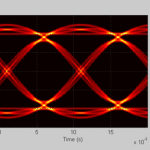
I am having problem with BER and Q Factor in DWDM system with Radio over Fiber.
I have designed DWDM system with 4 channels.
Following parameters used are 1-10 gbps bit rate, variable transmission length.
When i used 622 mbps bit rate, i get good BER < 1e-09 and Factor Q >6 . But when i try to use 1-10 Gbps bit rate, BER Analyzer cannot detect it ( BER : 1 , Factor Q : 0 )
How could i get good BER and Factor Q with 1-10 gbps bit rate?
Suggest me some ways so that i could get the expected results.Seeking your response. Thank you guys
Topic: Bit Rate, Factor Q and BER
Hello guys,
I so confused with my simulation about WDM because i don’t know about relation between bit rate with the Factor Q and BER. I’m trying with bit rate 622 Mbps and i get Factor Q >6 and BER >1e-09. And when i’m trying with bit rate 1 – 10 Gbps, i always get Factor Q : 2.2-2.5 and BER > 1e-09 . I hope anyone here can explain me about that or how to get Factor Q >6 and BER >1e-09 using bit rate 1-10Gbps . Thank youTopic: DWDM System
Hi everyone,
I am having problem in designing DWDM system with channel spacing of 25 GHZ or 50 GHZ.
I have designed DWDM system with 100GHZ channel spacing, but find no results when when i decrease Channel spacing to
25 GHZ. I have used symmetrical compensation technique with different advanced modulation formats MDRZ, CSRZ and DRZ.
Following parameters used are 40gbps bit rate, variable transmission length.
We use advanced modulation formats because CSRZ has narrow optical spectrum then the conventional RZ format
and high tolerance to group velocity dispersion (GVP) and mixed effect of self phase modulation (SPM).
DRZ transmitter of their optical modulation bandwidth DRZ format is very
attractive. It can be compressed to the data bit rate B that
is half- bandwidth of NRZ format 2B.
How could i reduce channel spacing.
Suggest me some ways so that i could get the expected results.
Here i am uploading the osd file of DRZ DWDM system.Seeking your response.

- Applications
Applications
Optiwave software can be used in different industries and applications, including Fiber Optic Communication, Sensing, Pharma/Bio, Military & Satcom, Test & Measurement, Fundamental Research, Solar Panels, Components / Devices, etc..
Stay up-to-date with the latest updates
- Products
Products
- OptiSystem
- OptiInstrument
- OptiSPICE
- OptiFDTD
- OptiBPM
- OptiFiber
- OptiGrating
- OptiMode
- OptiOmega
OptiSystemOptiSystem is a comprehensive software design suite that enables users to plan, test, and simulate optical links in the transmission layer of modern optical networks.OptiInstrumentOptiInstrument addresses the needs of researchers, scientists, photonic engineers, professors and students who are working with instruments.OptiSPICEOptiSPICE is the first circuit design software for analysis of integrated circuits including interactions of optical and electronic components. It allows for the design and simulation of opto-electronic circuits at the transistor level, from laser drivers to transimpedance amplifiers, optical interconnects and electronic equalizers.OptiFDTDOptiFDTD is a powerful, highly integrated, and user friendly CAD environment that enables the design and simulation of advanced passive and non-linear photonic components.OptiBPMOptiBPM is a comprehensive CAD environment used for the design of complex optical waveguides. Perform guiding, coupling, switching, splitting, multiplexing, and demultiplexing of optical signals in photonic devices.OptiFiberOptiFiber The optimal design of a given optical communication system depends directly on the choice of fiber parameters. OptiFiber uses numerical mode solvers and other models specialized to fibers for calculating dispersion, losses, birefringence, and PMD.OptiGratingEmerging as a de facto standard over the last decade, OptiGrating has delivered powerful and user friendly design software for modeling integrated and fiber optic devices that incorporate optical gratings.OptiModeOptiOmegaOptiOmega is a collection of products specialized for photonic integrated circuit simulation. It automates the design flow for
generating compact models from device level simulations. The software package includes two solvers that can be used via
Python scripting: Vector Finite Difference (VFD) Mode Solver and Finite Difference Time Domain (FDTD) Electromagnetic Solvers.Learn more about our products
- Downloads
Downloads
Download our 30-day Free Evaluations, lab assignments, and other freeware here.
Learn more about our 30-Day Evaluations
- Support
Support
Ask a questions

Want to learn more?
- Forum Login
- Student License
- Applications
Applications
Optiwave software can be used in different industries and applications, including Fiber Optic Communication, Sensing, Pharma/Bio, Military & Satcom, Test & Measurement, Fundamental Research, Solar Panels, Components / Devices, etc..
Stay up-to-date with the latest updates
- Products
Products
- OptiSystem
- OptiInstrument
- OptiSPICE
- OptiFDTD
- OptiBPM
- OptiFiber
- OptiGrating
- OptiMode
- OptiOmega
OptiSystemOptiSystem is a comprehensive software design suite that enables users to plan, test, and simulate optical links in the transmission layer of modern optical networks.OptiInstrumentOptiInstrument addresses the needs of researchers, scientists, photonic engineers, professors and students who are working with instruments.OptiSPICEOptiSPICE is the first circuit design software for analysis of integrated circuits including interactions of optical and electronic components. It allows for the design and simulation of opto-electronic circuits at the transistor level, from laser drivers to transimpedance amplifiers, optical interconnects and electronic equalizers.OptiFDTDOptiFDTD is a powerful, highly integrated, and user friendly CAD environment that enables the design and simulation of advanced passive and non-linear photonic components.OptiBPMOptiBPM is a comprehensive CAD environment used for the design of complex optical waveguides. Perform guiding, coupling, switching, splitting, multiplexing, and demultiplexing of optical signals in photonic devices.OptiFiberOptiFiber The optimal design of a given optical communication system depends directly on the choice of fiber parameters. OptiFiber uses numerical mode solvers and other models specialized to fibers for calculating dispersion, losses, birefringence, and PMD.OptiGratingEmerging as a de facto standard over the last decade, OptiGrating has delivered powerful and user friendly design software for modeling integrated and fiber optic devices that incorporate optical gratings.OptiModeOptiOmegaOptiOmega is a collection of products specialized for photonic integrated circuit simulation. It automates the design flow for
generating compact models from device level simulations. The software package includes two solvers that can be used via
Python scripting: Vector Finite Difference (VFD) Mode Solver and Finite Difference Time Domain (FDTD) Electromagnetic Solvers.Learn more about our products
- Downloads
Downloads
Download our 30-day Free Evaluations, lab assignments, and other freeware here.
Learn more about our 30-Day Evaluations
- Support
Support
Ask a questions
Want to learn more?
- Forum Login
- Student License